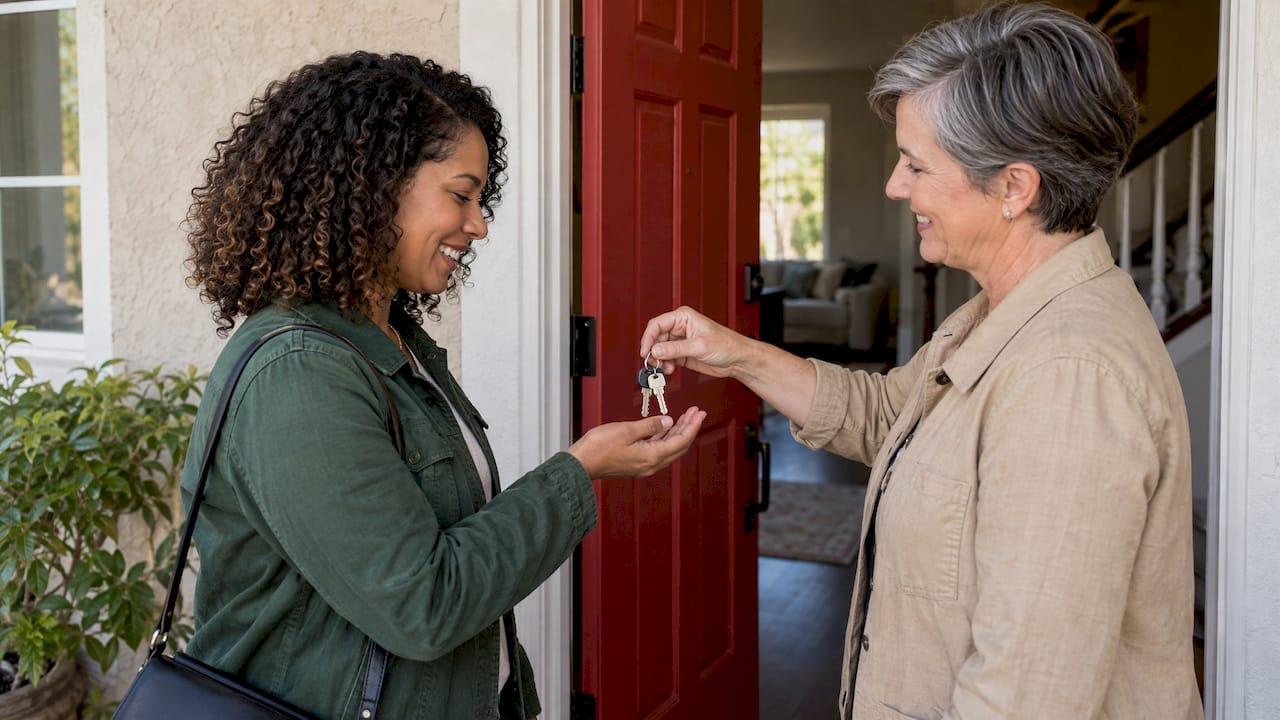
Yes, a home sale and a purchase can close on the same day in Chino Hills, and for move-up families it is often the cleanest way to go from one house to the next with no gap. It works when both escrows are built around the same date, every dependency is written down, and there is a plan for a one-day slip. We handle move-up and move-down transitions for Chino Hills, Chino, Eastvale and Ontario families, and this is the routine we would walk a friend through.
TL;DR
- “Closing” in California means the deed is recorded with the county, not that you signed papers in the morning. A same-day plan has to account for funding and recording.
- Both escrows need to be lined up on the same date, with every payoff, loan condition and HOA document ordered early.
- Sale proceeds often fund the purchase, so a delay on one side can move the other. Ask for a written plan for a one-business-day delay.
- Possession is set by your purchase contract, not the calendar. Book movers for the morning after closing unless your contract and escrow say otherwise.
- Verify wire instructions by phone at a known number before you send anything.
Table of Contents
- What “same day closing” actually means in California
- Who same-day closing is for
- What has to line up before closing day
- A sample same-day timeline
- What can delay a same-day closing
- Chino Hills details that affect your timing
- Possession, keys and moving day
- A step-by-step plan for a same-day move-up
- How we handle move-up and move-down transitions
- FAQ
- Sources
What “same day closing” actually means in California
People use “closing” for several different events. Signing documents, funding a loan, recording the deed, closing escrow and handing over possession are related but separate steps. One escrow-industry guide makes the point that a sale and a replacement purchase may close on the same day, but neither is complete just because papers were signed. Funding, escrow conditions and recording still have to happen.
California makes this distinction sharp. A California escrow company’s FAQ explains that signing loan documents is not closing. Closing happens when the recordable documents are stamped by the County Recording Clerk. Even after the lender funds, the wire has to clear the Federal Reserve system before title can record. So a 10:00 AM funding can still mean waiting for the recording confirmation.

That is the first thing to settle with your escrow officer: which of those events they mean by “closing day.” If you want a plain walk-through of the seller side, how escrow closing works for sellers covers why signing and funding are not the finish line in California.
Who handles escrow? According to the California Department of Real Estate, in Southern California escrow is most often performed by an independent company licensed by the Department of Financial Protection and Innovation. The same page says the deed is typically recorded at the county recorder’s office within 1 to 3 days after title is issued and escrow closes. A same-day plan is built around that reality: you are lining up two recordings, not two signing appointments.
Who same-day closing is for
The typical Chino Hills case is the move-up seller: you have outgrown a starter home, you want to stay in the same school area, and you do not want to be homeless in between. Moving from one house directly into the next is the goal, and it is the reason we build transitions for families, not just listings. Move-down sellers and downsizers have the same need in reverse.
Fidelity’s guidance on buying and selling at the same time describes the ideal as negotiating both closings to land on the same day so you go straight from one home to the other. It also says closings are commonly delayed, so you should always have a plan B. That is the right frame: aim for one day, prepare for two.
If you are a first-time buyer with no home to sell, the same-day question is simpler. You are mostly asking when you get keys after funding, which we cover below.
What has to line up before closing day
A same-day closing is a chain. One escrow guide lists what must align:
- final loan approval
- signed documents
- buyer funds
- sale proceeds
- payoff demands
- title clearance
- escrow instructions
- lender funding
- county recording schedules
- possession terms
If your sale proceeds are your down payment, the sale has to fund and disburse before the purchase can. That is why the order of events matters more than the date itself.
Documents and time to read them
The California Department of Real Estate’s consumer escrow guide advises buyers to ask for enough time to read loan documents before the signing appointment. It also suggests requesting an estimated closing statement up front so the final down payment amount is never a surprise. On a same-day plan, when the sale side and purchase side both sign in the same 24 hours, that early look matters even more.
The same guide treats escrow officers as human: errors happen. It tells buyers and sellers to check names, vesting, the property address and dates in writing before signing, because a misspelled name on a recorded grant deed is hard to fix after recording.
Good funds, not personal checks
The California escrow FAQ cited above says closing requires good funds: a wire or a cashier’s check, not a personal check. A cashier’s check needs to be in the bank overnight before closing. If you are bringing cash to the purchase, handle that the day before, not the morning of.
Payoffs and HOA packages go out first
A Chino Hills escrow office says it sends payoff demands and HOA document packages out on day one, because those are the two items that most often move a closing date. We would put it the same way: order them the day escrow opens, on both sides.
A sample same-day timeline
Here is one well-coordinated sequence. A moving company’s closing-day guide describes it this way:
| Time | What happens |
|---|---|
| 8 AM | Sale documents signed |
| 10 AM | Net proceeds wired to the purchase title company |
| 1 PM | Wire clears, purchase signing begins |
| 3 PM | Deed recorded, keys released |
Treat this as a best-case illustration, not a promise. Your times depend on your lender, your escrow officers and the county recording schedule. The same guide advises scheduling move-in delivery for the morning after closing rather than the same afternoon, because wire processing alone can push key release to late afternoon.
One more detail from a transaction-timeline guide: the deed is recorded the same day or the next business day, and keys are released the same day as recording. So the recording, not the signing, is the clock that matters for your move.
How long until the money and the paperwork arrive
One California escrow company reports that most escrows disburse within 1 to 5 business days after all conditions are met, with a standard home-purchase disbursement 1 to 3 business days after signing. Funds can therefore reach you after the day you sign. If you need sale proceeds on the same day to fund your purchase, confirm with escrow how and when they will be released, in writing.
After closing, the FAQ above says the grant deed arrives from the County Recorder about 3 to 6 weeks later, and the title insurance policy about 60 days after closing. Do not worry when the paperwork is not in the mailbox the next week.
What can delay a same-day closing
One late item can hold up everything. Rocket Mortgage lists the common causes: appraisal issues, unresolved inspection problems, missing documents, title problems such as liens or undisclosed heirs, and funding delays from bank transfers or underwriting.
With two transactions, a delay compounds. A real estate law firm notes that financing holdups, wire delays, title problems, last-minute repair disputes and scheduling can each delay one closing and cascade into the other. The picture they paint: a homeowner with belongings already packed and no place to live, or a purchase that fails for lack of sale proceeds. Their point is that protections depend on your contract terms and the reason for the delay, which is why the contract language needs your attention before you commit to a date.
Habits that keep your date
The prevention list from an escrow company’s delay guide is practical and works for both sides:
- Respond to lender and escrow requests promptly.
- Keep your accounts stable: no new credit, large deposits or job changes during escrow.
- Confirm repair receipts or photos at least a week before closing.
- Schedule the final walkthrough the day before closing.
Wire fraud is the real money risk
A 2026 timeline study reports wire fraud as the top cause of buyer loss at close, with an average loss of $137,000 per incident in 2025. It recommends verifying wire instructions 1 to 3 days before close by calling the title company at a number you already know. A same-day closing moves more money in fewer hours, so do this early. A Chino Hills escrow office says it verifies wiring instructions by voice, never by email. That is the standard to hold every party to.
Ask for a written plan B
Ask both escrow officers to identify every same-day dependency and put in writing what happens if closing slips one business day or more. Pay attention to a delay that would land on a weekend or holiday, since the county recorder and banks do not work through those. That conversation is easier before you have signed than at 2 PM on closing day.
Chino Hills details that affect your timing
A local escrow office’s Chino Hills page points out that many local sales are move-up or move-down transactions, so linked escrows with coordinated timing are common. It also notes that most Chino Hills homes were built from the 1980s onward, many in planned communities with HOA dues, gates or shared amenities. That makes HOA resale documents, transfer fees and special assessments an early task, and the page recommends ordering them the day escrow opens.
Hillside and canyon-edge homes often sit in mapped Fire Hazard Severity Zones with slope or drainage easements. The same page advises reading the Natural Hazard Disclosure and the preliminary title report during the contingency period, and starting homeowner’s insurance quotes early. Insurance on the new home is a closing condition for most lenders, so a late quote can threaten a same-day plan on its own.
If you are choosing neighborhoods before you tour, our Chino Hills community page is the place to start. For the cost side of your sale, see seller closing costs in California.
Possession, keys and moving day
Closing date and move-in date are not automatically the same. A guide on closing-day possession explains that the purchase agreement’s possession clause governs. “Possession upon closing and funding” means you can move in once the transaction is funded and recorded. Other contracts give the seller hours or days after closing. The gap between signing and keys can be a couple of hours or a full extra day.
The California escrow FAQ adds that keys are transferred by the real estate agents outside of escrow. So your agent matters on closing day, not just before it.
A coordination guide suggests building one master timeline covering listing, inspections, loan deadlines, closing, possession, packing, utility transfers and moving. It also advises keeping a contingency fund for storage, temporary lodging, utility overlap and bridge financing. And do not shut off utilities at the old home until the final walkthrough and move-out are complete.

Fidelity’s guidance adds that you may have to trade some price flexibility to save on temporary housing costs. If your buyer or seller needs a few extra days, a short rent-back or delayed possession can be worth more than the same-day headline.
A step-by-step plan for a same-day move-up
- Decide your sequence before you list. Know whether your down payment depends on your sale proceeds. That fixes which closing must fund first.
- Set the target date in both contracts. Match the close-of-escrow dates, and read the possession clause on each side.
- Open both escrows with the same coordination in mind. Tell each officer the other transaction exists, and ask them to list every dependency.
- Order payoffs and HOA documents on day one. These move dates more than anything else.
- Keep your finances still. No new credit, large deposits or job changes until recording.
- Check the numbers early. Ask for an estimated closing statement and verify names, vesting and dates in writing.
- Verify wire instructions by phone. Do it 1 to 3 days before closing, at a known number.
- Walk through the day before. Confirm repairs and condition.
- Book movers for the next morning. Unless the contract gives you same-day possession and you have confirmed funding and recording.
- Hold a bridge. Budget for a few nights of lodging or storage in case the date slips.
How we handle move-up and move-down transitions
Our Move-Up/Down service coordinates the sell-and-buy transition for families in Chino Hills, Chino, Eastvale and Ontario. Mike Velez personally handles every transaction. On the sell side, you can choose a Demand Blueprint listing at 2.5%, or a flat fee option: Essentials at $9,500, Full Service at $12,500, or Full Service + Media Plus at $15,800, all one-off. Our written 14-Day Sale Guarantee gives you a timeline to plan your purchase around. On the buy side, the VIP Buyer Program is where we start with curated off-market and MLS inventory.

If you are planning a move within the next few months, start by looking at the sell options and then talk to us about the date you want to move on. The earlier we know the target, the more room you have to build it in.
Perspective
Most families who call us about same-day closing are really asking a different question: how do I get out of my house and into the next one without a gap. The answer starts well before closing day. It starts with how the house is sold.
That is why we engineer buyer demand with the Demand Blueprint instead of just listing and waiting. Multiple offers early give you choices on price, on terms and on the closing date. A seller with options can ask for the date that fits their purchase. A seller with one offer takes what is given.
The Equity Advantage listing and our flat fee options exist for the same reason: money you keep in the sale is money that helps you with the next down payment, the bridge and the move. And because I personally run every deal, the person who set the strategy is the person watching the calendar when the escrow officer calls.
Aim for one day. Plan for two. Put both in writing.
Mike Velez
FAQ
Can I buy and sell a house on the same day in California?
Yes. Both closings can be scheduled for the same date, and linked escrows are common among local move-up and move-down households. Because each side depends on funding and recording, ask both escrow officers for a written plan if either one slips a business day or more.
Does signing the papers mean I own the home?
Not yet in California. Closing happens when the county stamps and records the documents, and a wire must clear before title can record. Your escrow officer can tell you exactly when recording is expected on your file.
When do I get the keys on closing day?
It depends on the possession clause in your contract. With possession upon closing and funding, keys come after the deal is funded and recorded, which can be hours after signing. Your agent hands over the keys outside of escrow.
What if my closing is delayed?
Common causes are appraisal issues, inspection problems, missing documents, title liens and funding delays. Plan for one extra business day with a written backup, a short lodging budget and movers booked for the following morning, so a slip does not become an emergency.
Sources
- Can a Home Sale and Purchase Close on the Same Day?
- Frequently Asked Questions: Loan Documents Through Closing
- California Department of Real Estate: First Home
- California Department of Real Estate: Escrow guide for consumers
- How the escrow closing process works for sellers
- How to buy and sell a house at the same time
- Syncing Closing Day and Move-Out Day
- Real Estate Transaction Timeline: 41 Steps (2026)
- How Long Does Escrow Disbursement Take in California?
- Close of escrow: What to know
- Think Twice About Buying and Selling a Home on the Same Day
- Escrow Delays: Common Causes and How to Avoid Them
- Escrow Services in Chino Hills, California
- How to Coordinate Selling, Buying, and Moving at the Same Time
- Can I Move In on Closing Day?