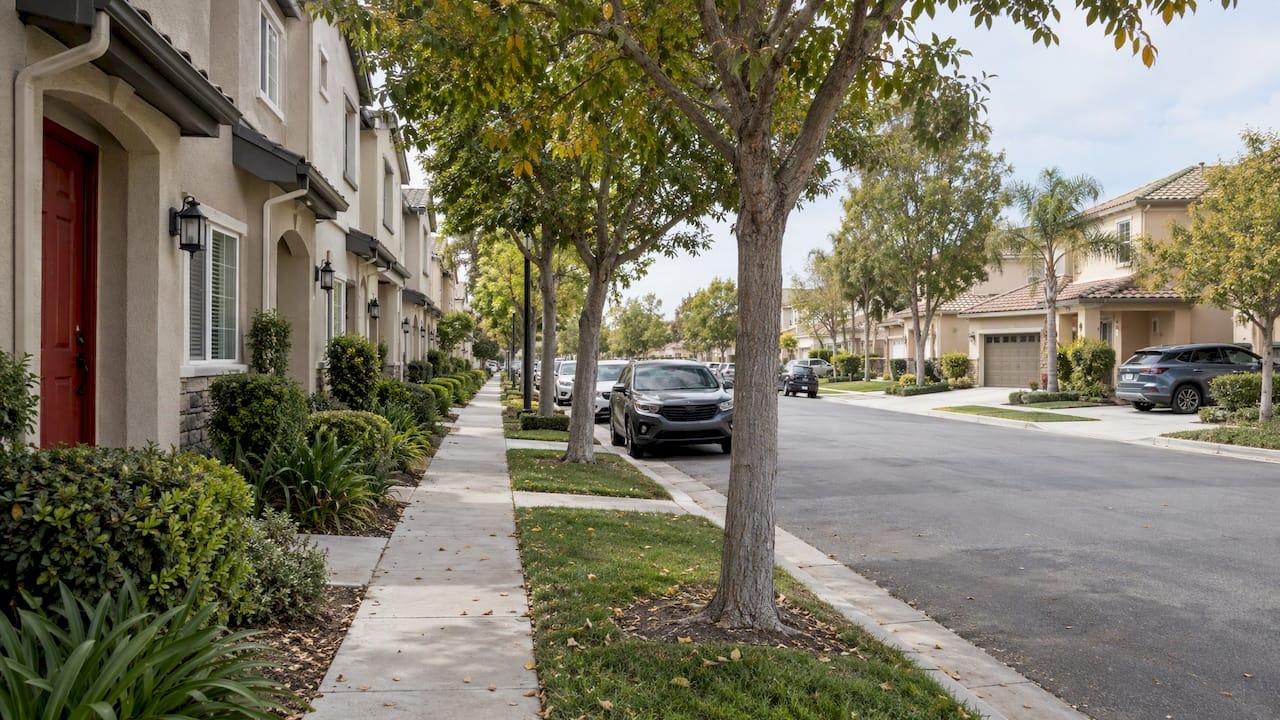
Choose an HOA home if you want shared amenities, predictable exterior upkeep and a neighborhood with enforced standards. Choose a no-HOA home if you want more control over your property and are comfortable budgeting for repairs yourself. Neither is better in general. The right answer depends on how much you value convenience and control, and on whether the specific association is financially healthy.
I’m Mike Velez, and I help families buy and sell in Chino Hills, Chino, Eastvale and Ontario. This question comes up on almost every buyer tour, so here is how I walk clients through it.
TL;DR
- An HOA trades some freedom for shared maintenance, amenities and enforced community standards. A no-HOA home gives you control and puts every repair bill on you.
- Dues are not the whole comparison. Add up what you would pay yourself for the same services, then look at the association’s reserves.
- In California, you cannot opt out of an HOA in a common interest development. Membership transfers automatically with the property.
- Research on 34 million transactions found HOA homes sell at a premium over similar non-HOA homes, but that does not guarantee any single home’s value.
- Read the HOA documents the seller must provide before you commit. The budget, reserve and special assessment details matter most.
Table of Contents
- What an HOA is and whether you can refuse to join
- How common HOAs are
- HOA vs no HOA at a glance
- Advantages of an HOA community
- Disadvantages of an HOA community
- Advantages of a no-HOA home
- Disadvantages of a no-HOA home
- Comparing the real monthly cost
- What to check before you buy into an HOA
- Which one fits you
- Our perspective on HOA vs no HOA
- Selling or buying in an HOA community with us
- FAQ
- Sources
What an HOA is and whether you can refuse to join
A homeowners association is a body of owners in a defined area that sets rules, collects assessments and maintains shared property. It can govern a two-unit townhome building, a condo complex or a large master-planned community. HOAs exist to preserve the nature of the community and protect members’ property values, according to the Community Associations Institute’s first-time buyer guide. They are run by elected boards.
Can you refuse to join? Not if you buy in one. The California Department of Real Estate explains that under the Davis-Stirling Common Interest Development Act, membership in the association transfers automatically with the lot or unit and cannot be separated from ownership. The Cornell Legal Information Institute describes the same idea nationally: a legal servitude binds the owner to follow the CC&Rs. Federal and state law can still limit rules that are unconscionable or against public policy, such as bans on service animals.
So the real choice happens before you buy. If you do not want an HOA, you filter for homes without one from the start of your search.
How common HOAs are
More homes carry dues every year. Realtor.com data reported in January 2026 shows the median HOA fee reached $135 in 2025, up from $125 in 2024 and $108 in 2019. Nearly 44% of U.S. homes for sale now carry monthly dues, up from 34.3% in 2019.

That is a national median. Single-family homes in newer master-planned areas often sit well above it, and condos vary widely depending on what the dues include. Do not budget from a national number. Budget from the actual listing.
HOA vs no HOA at a glance
| Factor | HOA community | No-HOA home |
|---|---|---|
| Monthly cost | Regular dues, plus possible special assessments | No dues, but you fund every repair and service yourself |
| Exterior rules | Governing documents set what you can change | Local codes apply, and you decide the rest |
| Common areas and amenities | Maintained by the association | Usually none, or you pay for your own |
| Maintenance | Shared items handled by the association, your own unit or lot by you | All yours |
| Budget predictability | Dues are set, but assessments can rise | Lumpy: one large bill can hit at any time |
| Neighbor disputes | Often routed through the board and rules | Handled directly or through the city |
| Buyer paperwork | Extra disclosure package to review | Standard disclosures |
Advantages of an HOA community
Shared maintenance and amenities. Chase’s mortgage guide lists the usual uses of dues: landscaping, upkeep of amenities such as pools, gyms and clubhouses, common-area utilities and insurance, and contributions to a reserve fund for major repairs. For a busy family, not having to organize a roof, paint or pool project for shared property is real value.
Consistent standards. Rules on paint colors, landscaping and exterior changes keep a street looking the way it did when you bought. Many buyers pay for exactly that.
A budget with line items. The California DRE’s buyer’s guide says an HOA budget must account for fixed costs such as taxes and insurance, operating costs, reserves for replacing major components like roofing, painting, paving and pools, administration, and a contingency. A well-run association has already planned for the big items.
Resale strength. A 2019 Journal of Urban Economics study by Clarke and Freedman used Zillow data on 34 million transactions in 44 states. It found that houses in HOAs sell at a premium of at least 4 percent, or $13,500, over observably similar houses outside HOAs. It also found homeowners obtain $1.19 in benefits for every $1 paid in dues. The same paper notes the premium varies with local land use regulation and local public spending, so it is an average and not a promise for one address.
Disadvantages of an HOA community
You pay whether or not you use the amenities. The CAI guide stresses that assessments are not voluntary. If they go unpaid, the association can take legal action, including placing a lien on your property, which in rare cases can lead to foreclosure.
Special assessments. The CAI guide says the absence of a reserve fund may lead to special assessments, which can be an expensive and unexpected burden. Fannie Mae’s homeowner guide adds that boards sometimes require one-time payments for things like unforeseen repairs after natural disasters or structural work.
Less freedom. Paint, fencing, landscaping, parking and sometimes rentals can all be governed by the documents. If you want a project car in the driveway or a bold exterior color, read the rules first.
Dues are not your whole housing cost. Fannie Mae notes that HOA fees are not part of the mortgage payment unless paid through escrow, property taxes are not included in most communities, and the association does not cover all of your homeowners insurance needs. Plan for taxes and your own policy on top of dues.
Advantages of a no-HOA home
Control. You decide how the property looks and how you use it, within local codes and permit rules. Owners planning an addition, a backyard build or a different exterior often prefer this route.
No monthly assessment. Your cash flow is not tied to a board’s budget decisions. That also means no vote on a dues increase.
Fewer governing documents. The purchase paperwork is simpler, and you are not dependent on how well volunteers manage a corporation.
Disadvantages of a no-HOA home
Every repair is yours. Roof, fences, exterior paint, irrigation, pool equipment, sidewalks in front of the house: you schedule and pay for all of it. Without an association’s reserve fund, you have to build your own. A practical habit is to set aside a monthly amount for exterior repairs so a roof or fence replacement does not become a financial emergency.

Services you arrange yourself. Lawn care, trash service where it is not municipal, and pool service are separate bills. Systems like heating and cooling also need regular attention, and it helps to see what HVAC maintenance costs when you compare dues against doing it all on your own.
Neighbor standards are not enforced by an association. A neighbor’s yard or exterior can drift from the neighborhood norm, and your recourse runs through the city or direct conversation.
Comparing the real monthly cost
Do not compare dues to zero. Compare dues to what you would pay for the same services. Here is the worksheet I give buyers.
- List what the dues cover. Landscaping, common-area utilities and insurance, amenities, trash, reserves. Ask for the budget, not the summary on the listing.
- Price the same items on a no-HOA home. Get quotes for lawn service, pool service if there is one, and trash if it is not municipal.
- Add a repair fund. For a no-HOA home, include a monthly reserve for roof, paint, fencing and similar items. For an HOA home, check whether the association funds the same items from reserves.
- Add what dues do not cover. The HOA Guide notes dues do not cover the interior of your unit, your personal insurance, your own utilities, or damage caused by your own negligence.
- Compare the totals alongside the purchase price, taxes and insurance, not dues in isolation.
Our homebuyer budget workbook walks through the monthly cap and cash-to-close math, so you can drop the dues line into a full picture of what you can afford.
A simple example: a home with $300 monthly dues that covers front-yard landscaping, common-area insurance and a reserve may cost you less in total than a no-HOA home where you pay a gardener, save for a roof and handle a shared fence yourself. The reverse can also be true if the dues fund amenities you will never use. Run your own numbers on each property.
What to check before you buy into an HOA
The DRE advises California buyers to review the association’s articles of incorporation, bylaws, CC&Rs, rules, budget and assessments, and the subdivision public report during the review period in the buyer’s guide. Sellers of common interest development lots or units must provide, per the DRE’s August 2026 update:
- Governing documents
- The latest annual budget and policy statement
- Current regular and special assessments, fees and delinquent charges
- Unresolved violation notices
- Construction-defect disclosures
- Approved assessment changes not yet due
- Age and rental restriction statements
- Up to 12 months of approved open-board minutes, if requested
- The most recent balcony inspection report
The items I read first:
- The reserve fund. Is there one, and does it match the age of the roofs, paving and amenities? Fannie Mae points out the financial statements show whether the association has a reserve account for future large expenses.
- Open-board minutes. They show pending projects, disputes and talk of assessments before the bill arrives.
- Unpaid dues and violations. Delinquency across the community can signal strain.
- Rental and use rules. If you may rent the home later or run a home business, confirm it is allowed.
- Lender requirements. Financing for condos and some planned communities can depend on the association’s finances. Understanding how a lender sees reserves and assessments, as in this look at what to check before closing on a house, keeps surprises out of your escrow.
Also walk the common areas, not just your unit. Deferred maintenance on shared property is the earliest warning of a future assessment. When you reach the end of escrow, our final walkthrough checklist covers what to confirm on the home itself.
Which one fits you
HOA tends to fit if you want low-effort exterior upkeep, you like amenities such as a pool or park, you are buying a condo or townhome where shared structure is unavoidable, or you value uniform standards on the street.
No HOA tends to fit if you want control over projects and appearance, you are handy or happy to hire out maintenance, and you can carry the cost of a large repair without an association’s reserve behind you.
New construction versus resale. Buyers comparing newer communities in Eastvale and Ontario Ranch against resale homes in Chino Hills and Chino should check dues and rules on every listing. Do not assume. The HOA status is a line item in the listing and the disclosure package, so ask for it before you tour.
If you are selling. An HOA changes what you must hand a buyer. California sellers in these communities provide the document package above, so request it early from the association. Having it ready before you list keeps your timeline intact. Our guide to seller closing costs in California shows what else lands on the seller’s side of the statement.
Our perspective on HOA vs no HOA
I have helped families buy and sell for over 30 years, and I see the same mistake repeatedly: buyers compare the dues number to zero and stop there. The better question is what a home costs you per month once you count everything it needs, and how much of that is predictable.
We tell move-up families to run both versions of a home through the same budget. Dues, taxes, insurance and a repair reserve go on one sheet. When the totals are close, the lifestyle question decides: do you want someone else maintaining shared areas, or do you want control?
For sellers, an HOA is a preparation item, not an obstacle. The buyer will read the documents, so we want them in hand before the first showing. That fits how we work. I personally run every deal, and our Demand Blueprint is built to create buyer competition quickly, which depends on a clean, complete package from day one.
Whichever side you are on, I would rather you choose with the full picture than be surprised after closing.
Mike Velez
Selling or buying in an HOA community with us
If you are selling a home in an HOA community, we handle the disclosure package, marketing and buyer demand as one process. Our Essentials listing is $9,500 one-off, Full Service is $12,500 one-off, and Full Service + Media Plus is $15,800 one-off. The Demand Blueprint is 2.5%. Details for each are on the page.

If you are buying and trying to decide between an HOA home and a home without one, our VIP Buyer Program is built to help you see matching inventory in Chino Hills, Chino, Eastvale and Ontario. Reach out through our site and I will go through the numbers with you.
FAQ
Is it better to have an HOA or no HOA?
Neither is better for everyone. An HOA suits buyers who want shared maintenance, amenities and consistent standards, and no HOA suits buyers who want control and can fund their own repairs. Compare the total monthly cost of each home, including the repair reserve you would build yourself.
Can I refuse to join the HOA?
Not if you buy a home in a California common interest development. Membership transfers automatically with ownership and cannot be separated from it, according to the California DRE. If you do not want an HOA, choose a home outside one.
Why do HOAs exist if no one likes them?
They exist to preserve the character of the community and protect members’ property values by maintaining shared areas and enforcing common rules. Research on 34 million transactions found HOA homes sell at a premium over similar homes outside HOAs. Dissatisfaction usually comes from strict rules or surprise assessments, which is why reading the documents first matters.
What happens if I do not pay HOA dues?
Assessments are mandatory. The association can take legal action, including placing a lien on your property, and in rare cases that can lead to foreclosure. If you are struggling to pay, contact the board or management company early and consider speaking with a California real estate attorney.
Sources
- California DRE Residential Subdivision Buyer’s Guide
- Cornell Legal Information Institute: homeowners’ associations
- CAI First-Time Buyer’s Guide to HOAs
- Gulfshore Business: HOA fees and Realtor.com data
- Chase: What Is an HOA Fee?
- Fannie Mae: What you need to know about your HOA
- The HOA Guide: What Do HOA Fees Cover?
- Clarke and Freedman: The Rise and Effects of Homeowners Associations
- California DRE update on Common Interest Developments
- Is HVAC Maintenance Worth It?
- Buying a House? What to Check on the HVAC Before You Close