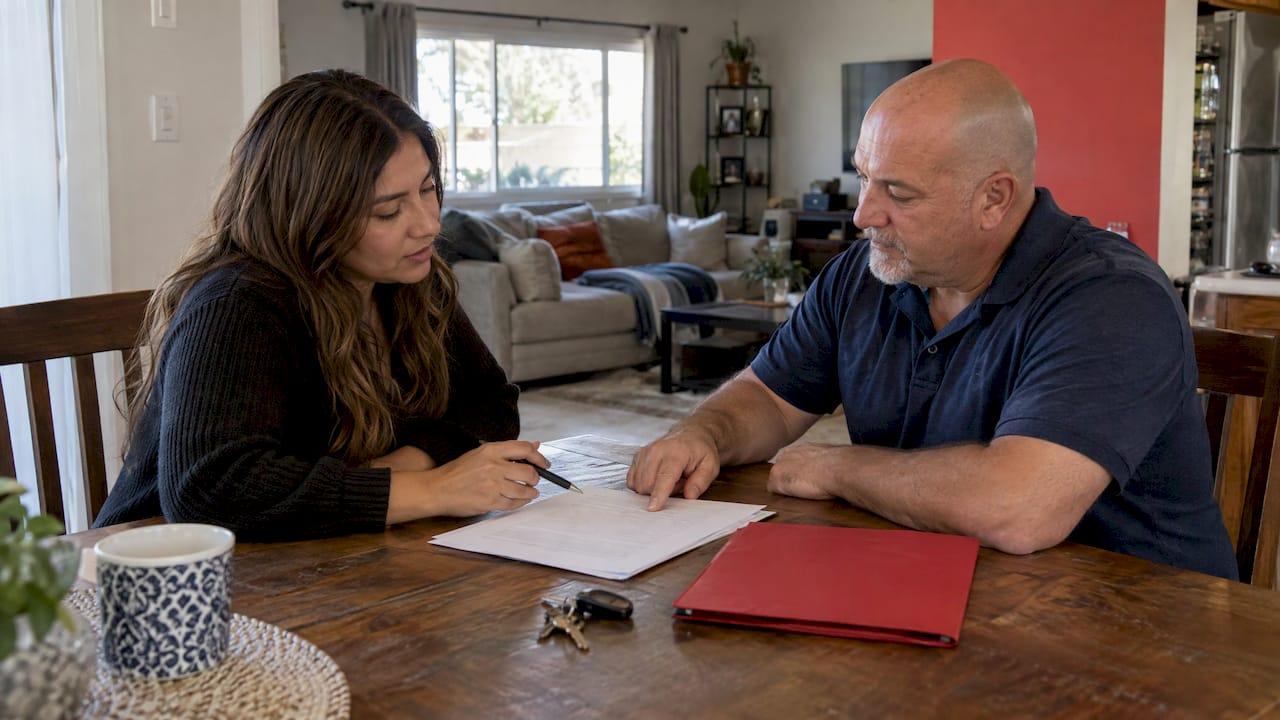
Cash for keys is a written deal in which an owner pays a tenant to move out by an agreed date and hand back the keys in agreed condition. It is legal in California, it is voluntary for the tenant, and for a landlord preparing to sell it is often faster and more predictable than a formal eviction. The catch is that state law and some city ordinances set rules for how the offer is made. Miss them and the agreement can be cancelled or turned against you.
This guide is written for landlords and small investors who want to sell a rental and need the unit empty, or at least predictable, for showings and closing. Tenants and homeowners facing foreclosure also see these offers, so one short section covers them.
TL;DR
- Cash for keys is a voluntary, written move-out agreement. California has no statute banning it, but a tenant cannot waive their legal rights in it, and pressuring a tenant to leave is unlawful.
- Los Angeles, San Francisco, Santa Monica and unincorporated LA County add disclosure, cancellation and filing rules. Check your own city before you make an offer.
- A formal eviction can run from about two months to a year and cost thousands in fees. A buyout can close in weeks.
- Amounts vary widely by city, rent and tenure. Los Angeles filings average $25,455.39, but that is a rent-controlled, high-rent market, not a statewide price.
- If you plan to sell, decide on the tenant question before you list, because it shapes your timeline, your showings and your buyer pool.
Table of Contents
- What a cash for keys agreement is
- Is cash for keys legal in California?
- Where local buyout rules apply
- Cash for keys vs. eviction in California
- How much does cash for keys cost?
- Steps to run a cash for keys deal
- Why the sale plan comes first
- Selling a rental in the Inland Empire with BLDG Realty
- Our view: decide the tenant question before the listing
- FAQ
- Sources
What a cash for keys agreement is
In plain terms, it is a contract. The owner offers money. The tenant agrees to leave by a set date, return the keys and leave the unit in an agreed condition. In return the owner pays, and usually the parties release each other from further claims. A typical process, as one lease-document provider lays it out, is to confirm who has authority to make the deal, check tenant protections, make a written offer, get every tenant and adult occupant to sign, do a move-out walkthrough, exchange keys for payment once conditions are met, and then handle the security deposit.
The same label is used in foreclosure. There, per Nolo, the lender or new owner offers a former homeowner a lump sum to leave quickly and leave the home in good condition. The rest of this article is about the landlord and tenant version.
Is cash for keys legal in California?
Yes. Practitioners point out that no California statute bars a landlord and tenant from agreeing that the tenant will leave for payment. Three limits matter:
- Civil Code section 1946.2 recognizes a written, mutual surrender agreement, but any waiver of the tenant’s rights is void.
- Pressure to vacate is unlawful under Civil Code section 1940.2.
- Cities with their own rent or just-cause ordinances may add buyout requirements.
A useful test for whether your offer is truly voluntary: ask what happens if the tenant says no. If the honest answer is that nothing changes, the offer is voluntary. If refusing would trigger a notice, a rent increase outside the rules or slower repairs, stop and talk to a landlord-tenant attorney.
One licensing point is easy to miss. Under Business and Professions Code section 10131, as summarized by a California law firm, anyone actively soliciting or negotiating cash for keys deals for an owner, lender or servicer must be a licensed broker or a supervised agent. Simply swapping a check for keys is generally ministerial and needs no license.
Where local buyout rules apply
State law is the floor. Some cities add much more. If your rental sits in one of these places, the steps below are mandatory, not optional.
| City or county | Before the offer | Cancellation window | Filing |
|---|---|---|---|
| City of Los Angeles (RSO units) | Signed RSO Disclosure Notice | 30 days after signing, in 12-point bold language | With LAHD within 60 days of signing |
| Unincorporated LA County | Disclosure Notice at least 45 days before signing | Up to 45 days after signing | See the county guide |
| San Francisco | At least 30 days of discussion before signing | Up to the 45th day after signing | Rent Board, between day 46 and day 59 |
| Santa Monica | Written Notice of a Tenant’s Rights | 30 days | City Clerk, between day 31 and day 60 |
The details come from the official pages: the Los Angeles Housing Department, the LA County Department of Consumer and Business Affairs, the San Francisco buyout page and the Santa Monica notice packet.
A few specifics worth knowing:
- In Los Angeles, the agreement must be in the tenant’s primary language. If the owner does not comply, the tenant may cancel at any time.
- In San Francisco, if the landlord misses the 59th-day filing deadline, the tenant may file it and void any language waiving rights or releasing claims.
- In Santa Monica, offering a buyout within six months after a tenant’s written refusal may count as bad-faith harassment.
This list is not complete, and rules change. If your property is in the Inland Empire or another part of California, confirm with your city’s housing or rent office whether a local buyout ordinance exists. If none does, state law and a carefully written agreement still apply.
Cash for keys vs. eviction in California
The comparison is mostly about time, cost and certainty.
| Cash for keys | Formal eviction | |
|---|---|---|
| Timeline | 14 to 45 days in one Los Angeles landlord guide | 60 to 120 days uncontested, 4 to 12 months contested, per the same guide for Los Angeles |
| Out-of-pocket cost | The payment, plus a lawyer to draft it if you choose | $4,000 to $15,000 or more in legal and court costs, per the same guide |
| Court filing | None | A $385 to $435 filing fee plus process-server and attorney fees, per an Orange County guide |
| Control | Both sides agree on the date and condition | A judge and the sheriff decide the timing |
| Records | Can include a release of claims and confidentiality | Public court record |
One more point for landlords: a landlord cannot force a tenant out without a court-ordered unlawful detainer and a sheriff lockout, as one California firm stresses. Changing locks or removing belongings yourself is never the shortcut.
Also know what the alternative costs when you end a tenancy for a no-fault reason. Under the Tenant Protection Act, no-fault terminations require relocation assistance equal to one month’s rent, paid within 15 calendar days of the notice or given as a written waiver of the final month’s rent. Missing it voids the termination notice. Local ordinances can raise the amount much higher, up to $27,400 in Los Angeles according to the same guide. That is why a negotiated buyout is often compared with the legally required relocation payment, not just with eviction court costs.
The state’s Tenant Protection Act was amended by AB 1529 effective January 1, 2026, and the section sunsets January 1, 2030, per the same source. Confirm current text before you rely on a template written earlier.
How much does cash for keys cost?
There is no statewide price. The amount depends on rent, how long the tenant has lived there, local rules and how fast you need the unit.

The best public data comes from Los Angeles. From January 2019 through September 2026, the city received 6,709 Tenant Buyout Agreements totaling $168,288,766, an average of $25,455.39 per unit, according to the LA City Controller. Those are rent-stabilized units in a high-rent market, so treat the figure as a ceiling for comparison, not a quote for Chino, Eastvale or Ontario.
Other published ranges show how much it moves:
- Los Angeles’ minimum buyout compensation under its notification program runs from $9,900 to $24,650 depending on tenure, age and disability, per the Los Angeles Times.
- In Orange County, one property management guide reports offers of about one to three months’ rent, roughly $2,400 to $7,200 in Placentia and $4,400 to $6,600 in Fullerton.
- The same guide reports most offers nationally land between $2,000 and $20,000.
For a market without a local ordinance, a practical way to size an offer is to add up what the vacancy would otherwise cost you: legal fees, court costs and lost rent through an eviction, against the rent you would collect while waiting. Then compare that with the relocation payment you would owe for a no-fault termination. An offer that beats both is usually a fair starting point. Your own numbers matter more than any average.
Steps to run a cash for keys deal
- Confirm you can make the offer. Check who owns the property, whether a lender or co-owner must agree, and whether a local ordinance applies. If you are hiring someone to negotiate for you, they must be properly licensed under section 10131.
- Check the tenant’s protections. Look at whether the unit is covered by the Tenant Protection Act or a local rent ordinance, and whether the tenant is a senior, a minor household member, a person with a disability or lower-income. Those categories can change local minimums.
- Deliver required notices first. In cities like Los Angeles, the disclosure notice has to be signed before you make the offer.
- Make the offer in writing. State the amount, the move-out date, the condition you expect, when payment happens and what happens to the deposit.
- Get every adult on the lease and every adult occupant to sign. One missing signature can leave you with someone still in the unit.
- Respect the cancellation window. Do not schedule a buyer’s closing on a date that falls inside a period when the tenant can still cancel.
- Document the unit. Dated photos at move-in and at the walkthrough protect both sides. A rental condition checklist helps you record what you find.
- Pay on exchange of keys. Hand over payment when the keys are returned and conditions are met, then handle the deposit as the law and the agreement require.
- File where required. Where the city requires filing, calendar the deadline on the day you sign.
The tenant side of this deserves honesty too. A lump sum can look generous, but replacement housing may cost more. UCLA law professor emeritus Gary Blasi told the Los Angeles Times that a buyout that looks like a windfall can leave a tenant worse off once new rent is counted. The county advises tenants to weigh Fair Market Rents and the relocation help they would receive in a just-cause eviction before signing. A fair offer is one the tenant could really use to land somewhere stable, which also makes it more likely to be accepted.
If you are a tenant who has received an offer, you do not have to accept. You can talk to an attorney or your local housing office first, and in cities with buyout rules you may be able to cancel after signing. Where an offer follows a problem with the unit’s condition, see how constructive eviction in California works before you decide.
Why the sale plan comes first
For a landlord, cash for keys is rarely the end goal. The goal is a sale. That changes the order of decisions.
- Vacant or tenant-occupied. Some buyers want the house empty for their own move-in. Others, including investors, will buy with the tenant in place. Your buyer pool and price depend on which you choose.
- Timing. A buyout lets you set a move-out date that sits before your target closing, with a cancellation window cleared. An eviction can push you past it.
- Showings. With a cooperative tenant, a buyout often comes with a showing schedule. California rules on entry notice still apply while the tenant lives there.
We lay out the main routes in our guide on selling a house with tenants. It covers the lease, notice and showing questions that come up before you list.
It is also worth costing the sale itself. The buyout is one line on your net sheet. Commission and closing costs are others, and our guides on seller closing costs in California and commission rates show what to expect.
Selling a rental in the Inland Empire with BLDG Realty
If you are selling a rental in Chino Hills, Chino, Eastvale or Ontario, the listing side of the plan is where we work. Our Demand Blueprint is a process built to create buyer competition so a house draws offers quickly, and our written 14-Day Sale Guarantee promises an acceptable offer within two weeks or you get paid. Mike Velez, our broker-owner, personally handles every deal.

On fees, our published options are Essentials at $9,500 one-off, Full Service at $12,500 one-off, Full Service + Media Plus at $15,800 one-off, and Demand Blueprint at 2.5%. See the sell options and what each includes, or look at the Equity Advantage listing, a lower-fee option that leaves more equity with the seller.
Our view: decide the tenant question before the listing
Landlords come to us after weeks of going back and forth about whether to evict, offer a buyout or sell with the tenant in place. The mistake is treating that as a legal side issue. It sets your closing date, your buyer pool and what you net.
Our advice is to start from the sale. Pick the date you want to close, work backward through any cancellation window or notice period, and then choose the tenant route that fits. Get the legal piece reviewed by a California landlord-tenant attorney, because the rules differ by city and an agreement that skips a required step can be cancelled.
On the sale side, we do not just list and wait. We build demand so offers arrive close together, and we put a written timeline behind it with the 14-Day Sale Guarantee. A lower-fee listing means more of the sale price stays with you after the buyout and the closing costs are paid.
Mike Velez
FAQ
Is cash for keys legal in California?
Yes. It is a voluntary private agreement, and no California statute bans it. Any waiver of the tenant’s legal rights in the agreement is void, and pressuring a tenant to leave is unlawful. Some cities add their own disclosure, cancellation and filing rules.
What is the average cash for keys in California?
There is no statewide average. Los Angeles filings from 2019 through September 2026 average $25,455.39 per unit, according to the City Controller. Other markets, like Orange County, have reported offers of one to three months’ rent. Rent, tenure and local rules drive the number.
Is cash for keys better than eviction?
For many landlords it is faster and less costly. A Los Angeles guide puts an uncontested eviction at 60 to 120 days and a contested one at 4 to 12 months, against 14 to 45 days for a buyout. A landlord still cannot skip the legal process by force, and the tenant must agree.
Who typically offers cash for keys?
In rentals, the landlord or someone acting for them. After a foreclosure, it is usually the lender or new owner. If a third party negotiates the deal for an owner, they generally need a California real estate license.
Can a tenant cancel after signing?
In some cities, yes. Los Angeles gives tenants 30 days, and San Francisco and unincorporated LA County give 45 days. Outside those places, the right depends on what the agreement says and on state law, so have an attorney review it.
Sources
- Free Cash for Keys Agreement Template (LawLease)
- Cash for Keys After Foreclosure Explained (Nolo)
- Cash for Keys: Legal, Voluntary and Often Unnecessary
- Cash for Keys: Don’t Get Locked Out of Compliance in California
- Tenant Buyout Notification Program, LAHD
- Understanding Tenant Buyout Agreements, LA County DCBA
- Buyout Agreements, SF.gov
- Sec. 37.9E Tenant Buyout Agreements, SF.gov
- Santa Monica Buyout Notice and Information packet
- Cash for Keys California: Landlord Guide, Borna Houman Law
- How to Evict a Tenant in California: 2026 OC Guide
- Cash-For-Keys? DON’T Sign Yet, Martinez Law Center
- Eviction process and laws in California
- Cash for Keys (Jan 2019 to Sep 2026), LA City Controller
- Take cash to leave a rent-controlled apartment? Los Angeles Times
- Cash for Keys California: Tenant Buyout AB 1482 Guide
- Document Rental Unit Condition in 48 Hours
- Constructive Eviction in California: Rights, Remedies, Steps